An event and its faces: 500 years of the Peasants’ War [Ein Ereignis und seine Gesichter: 500 Jahre Bauernkrieg]
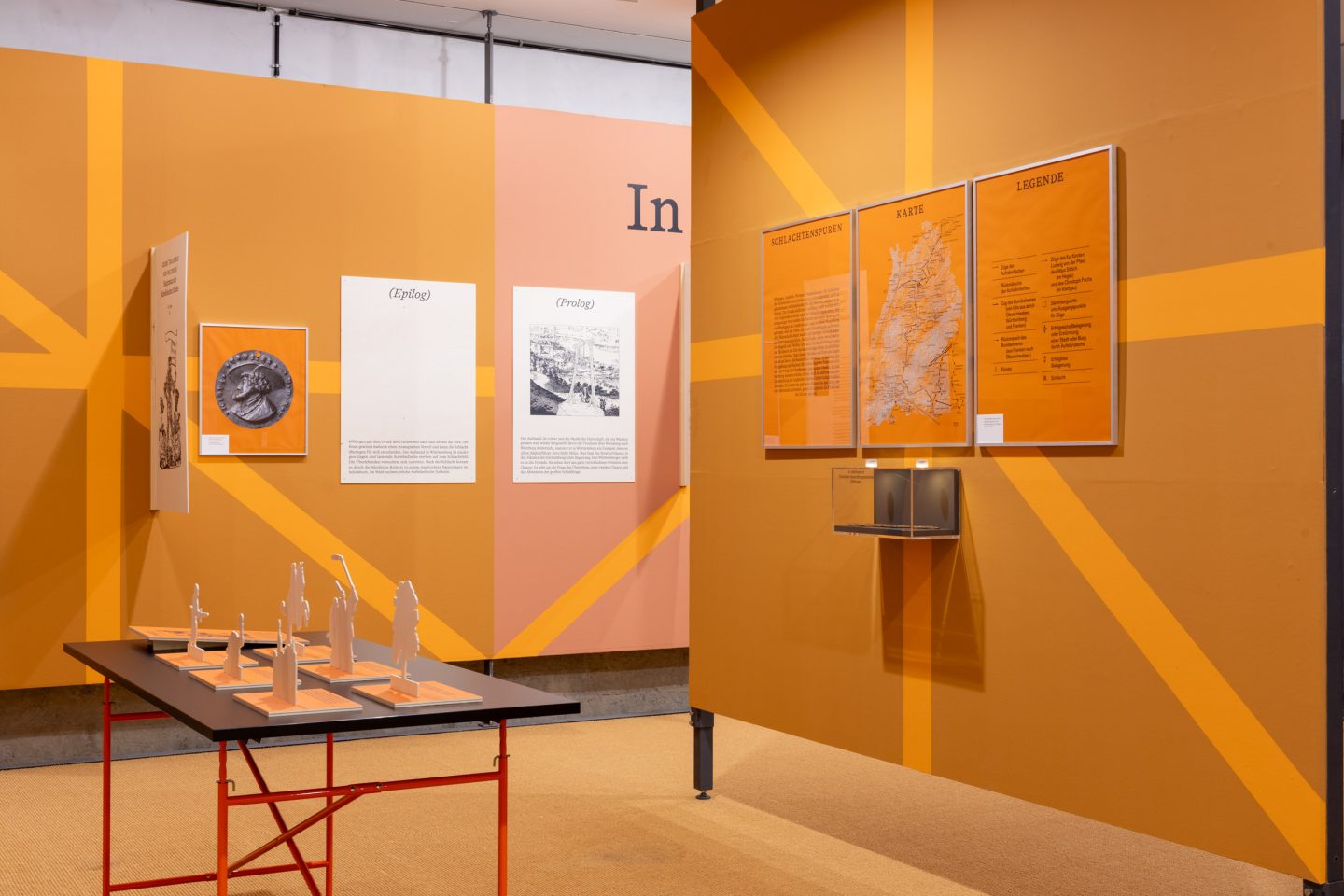
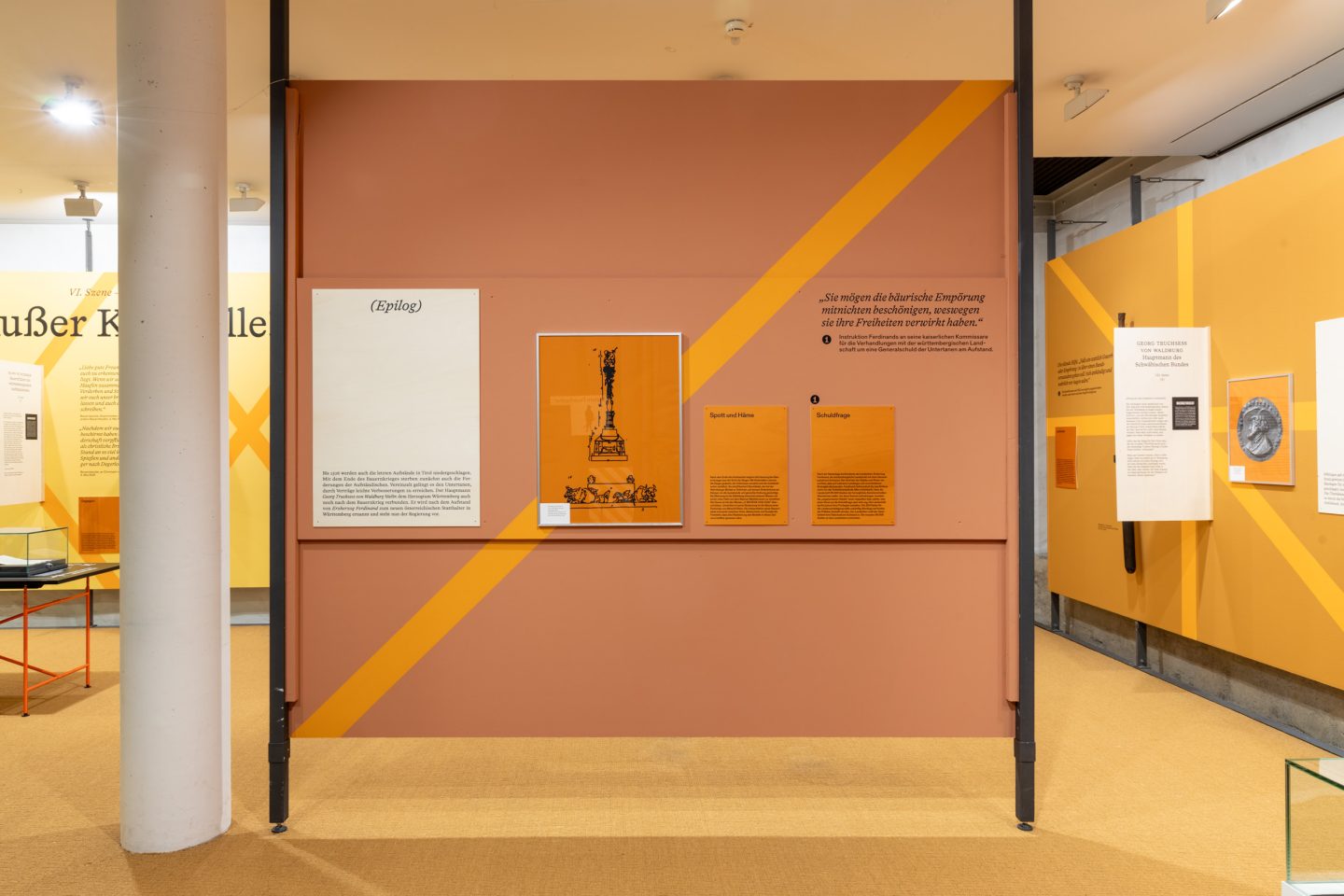
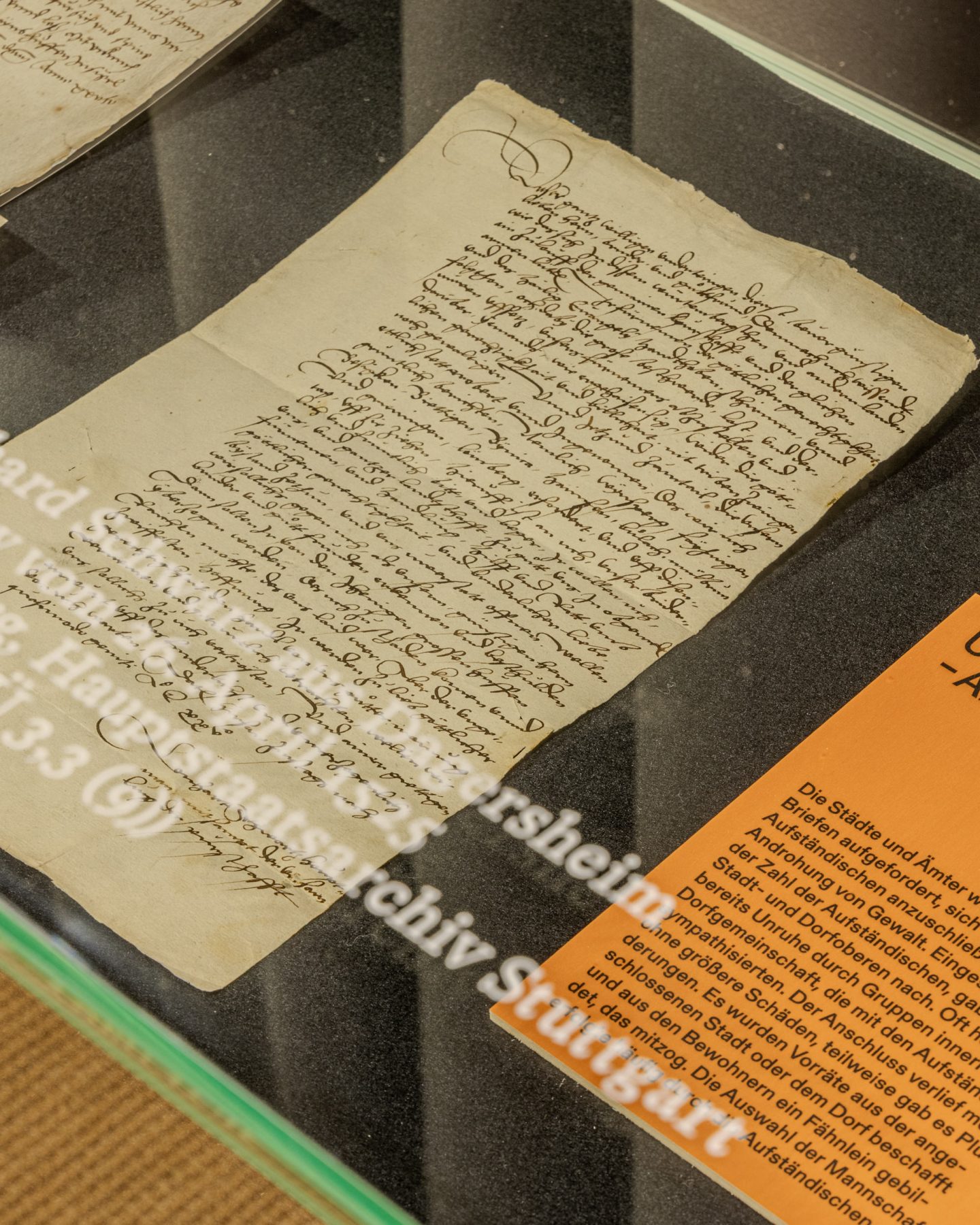
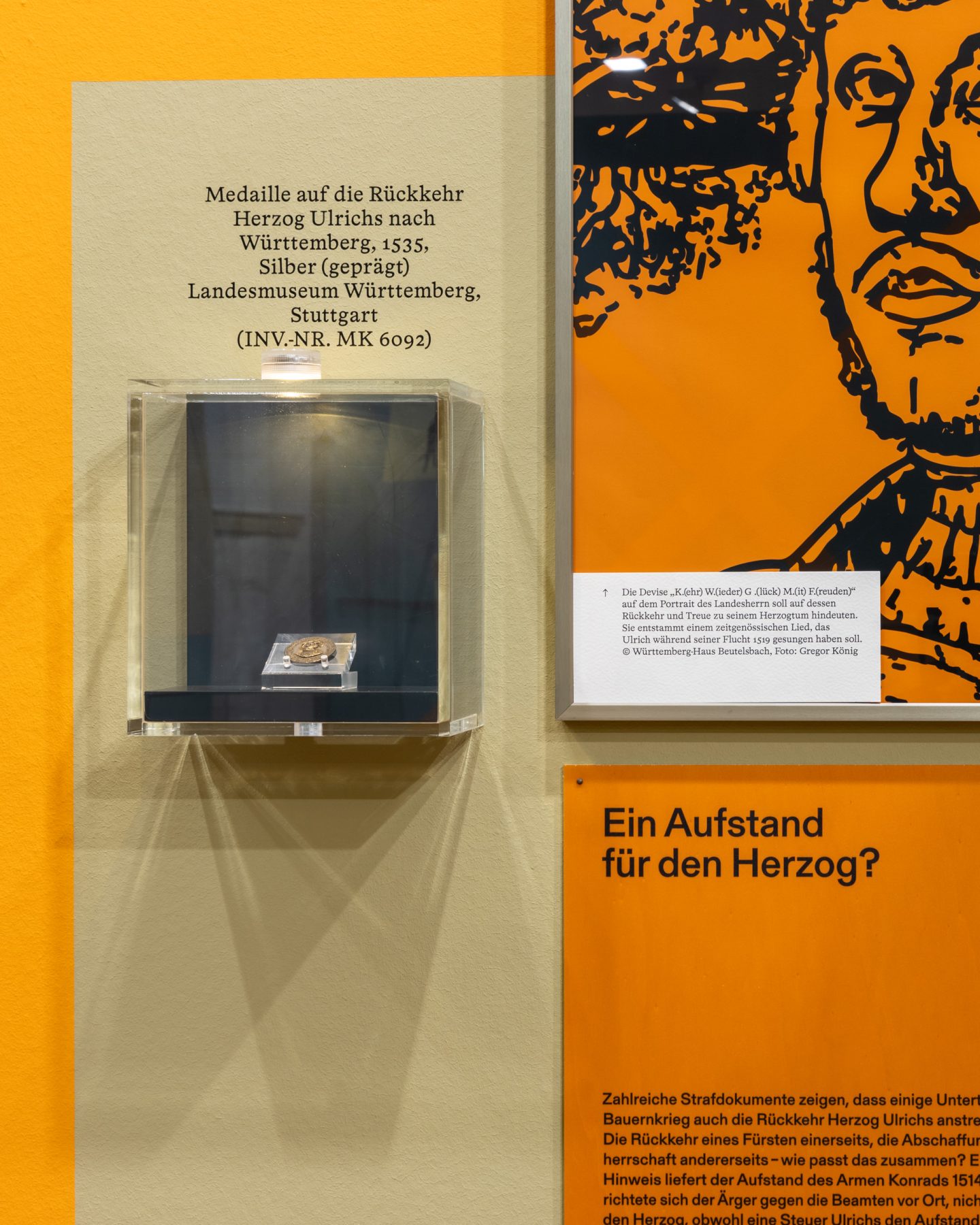
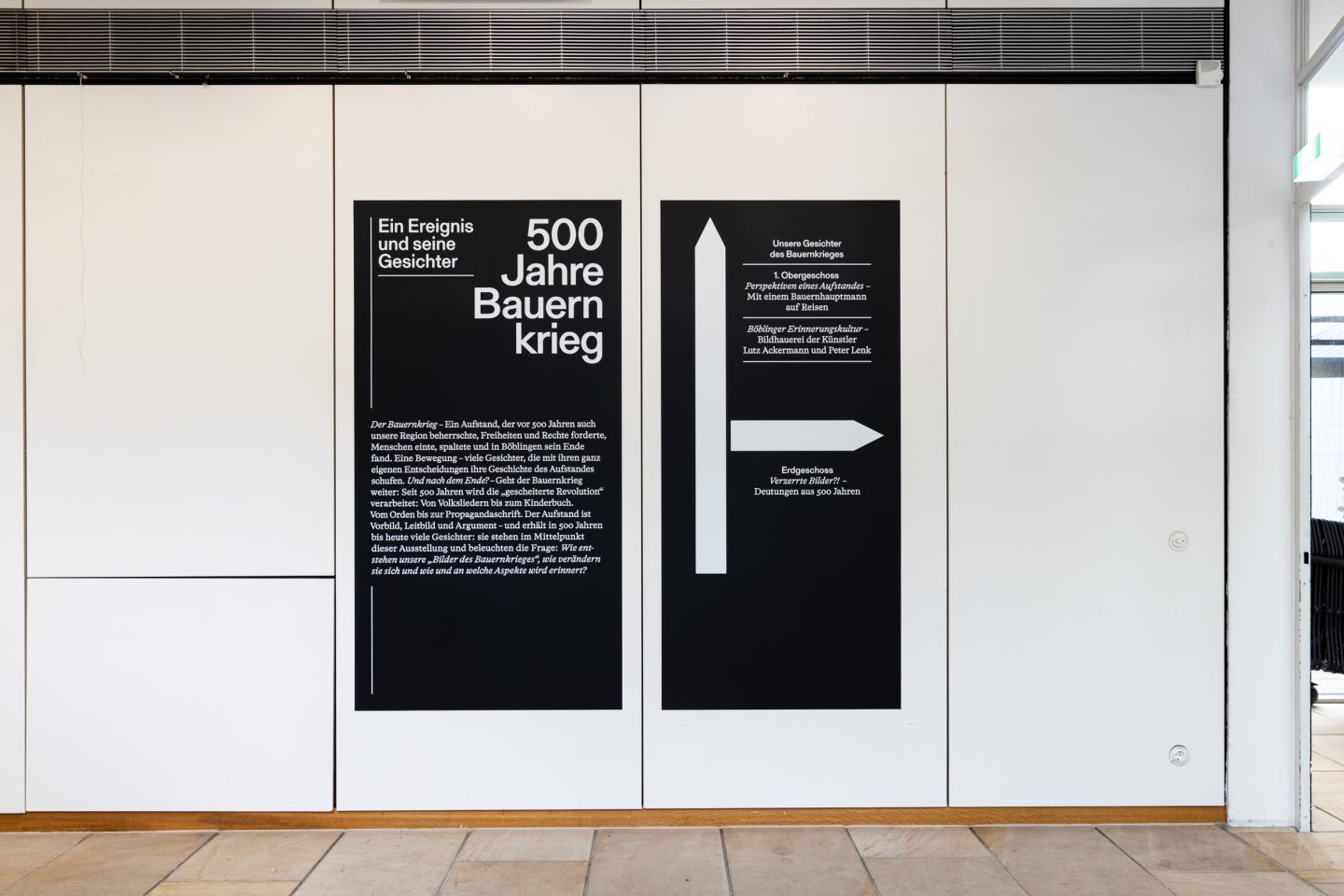
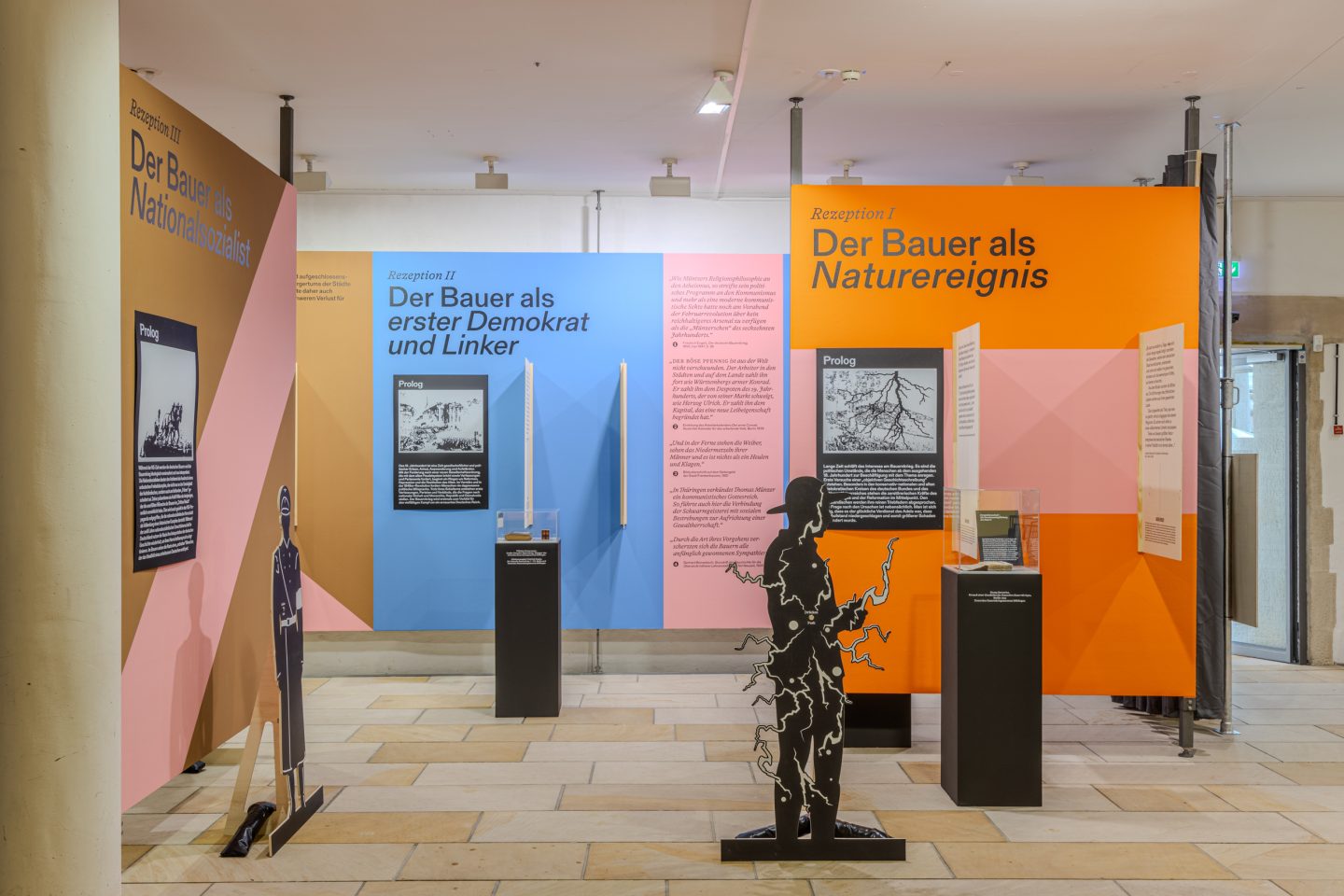
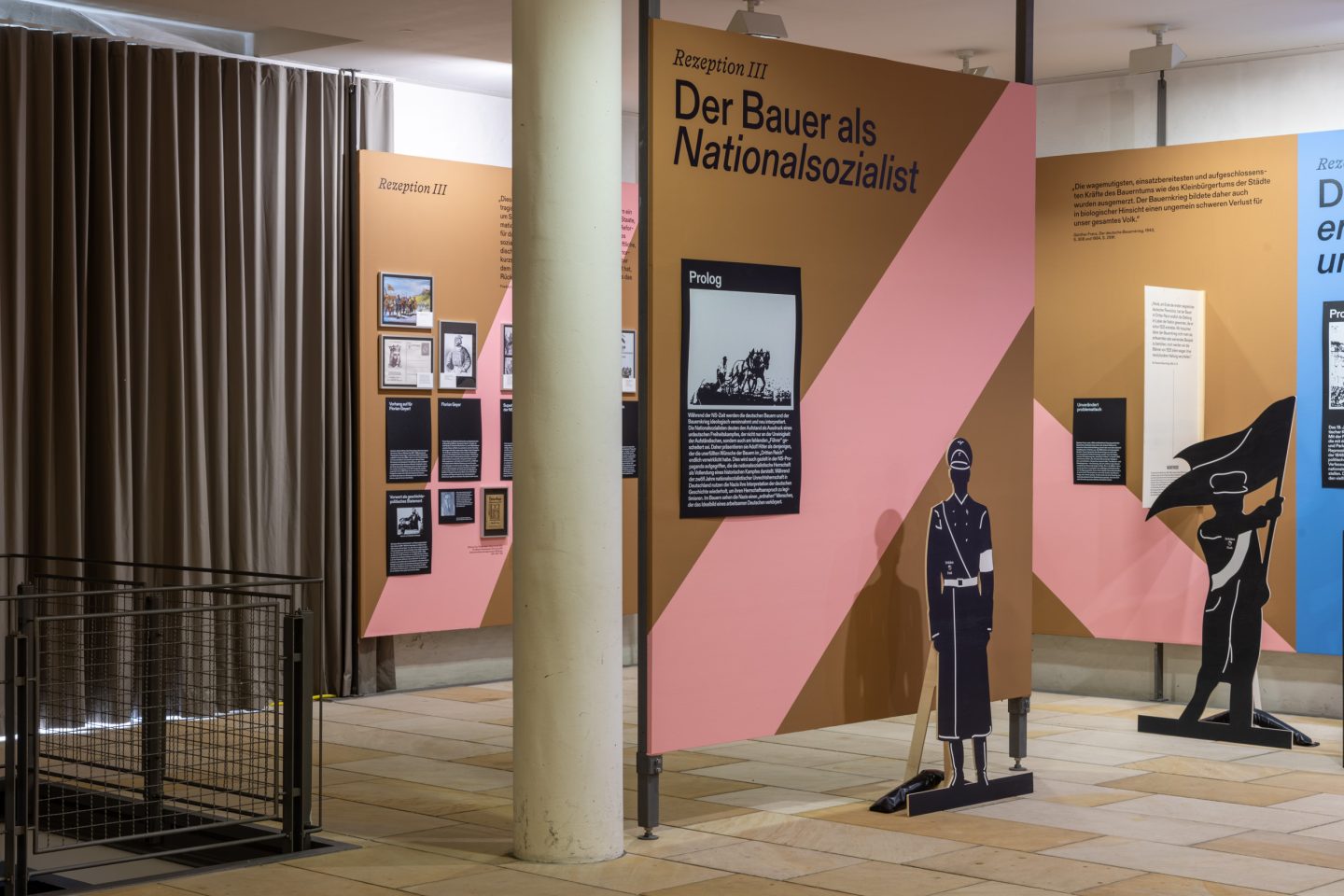
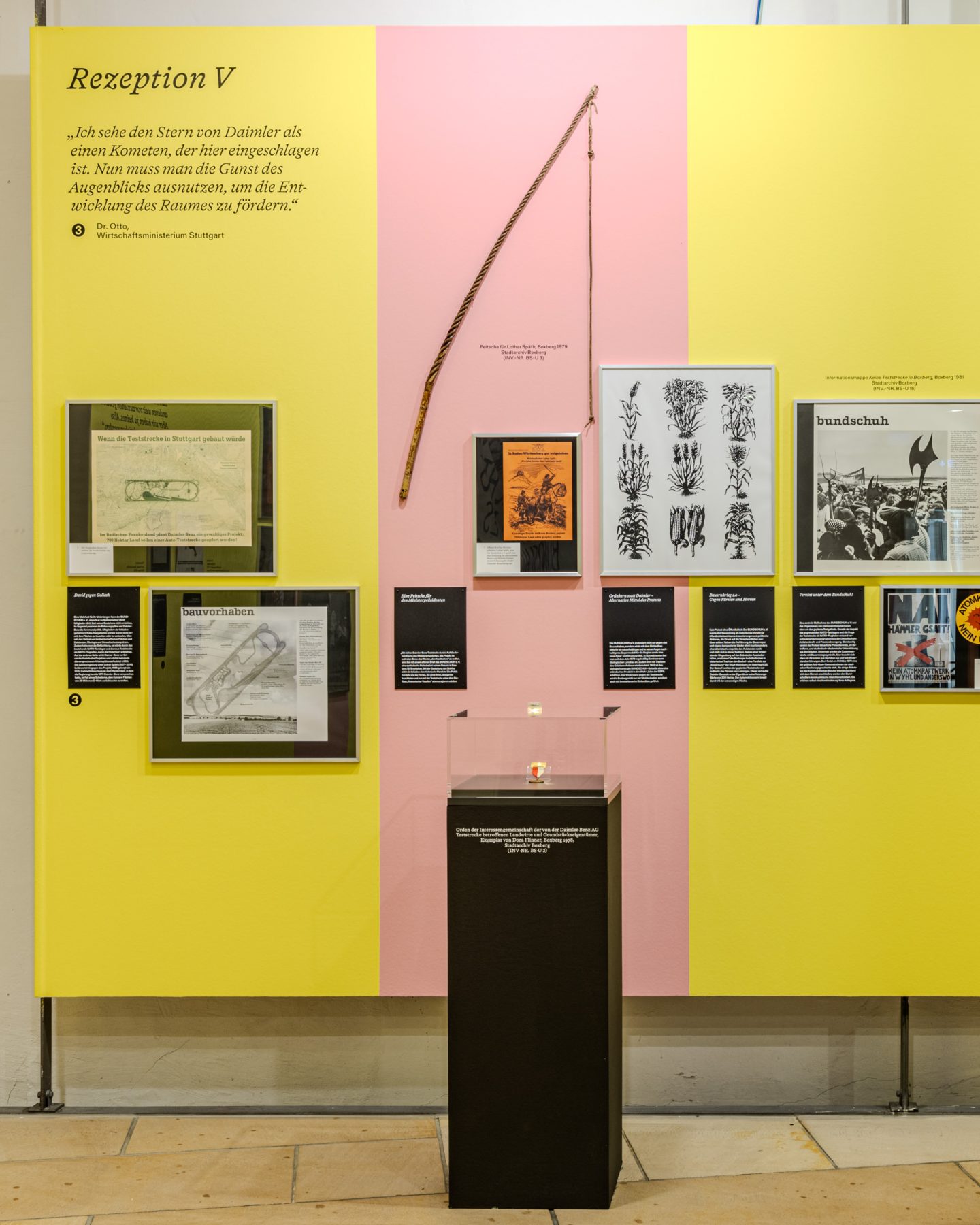
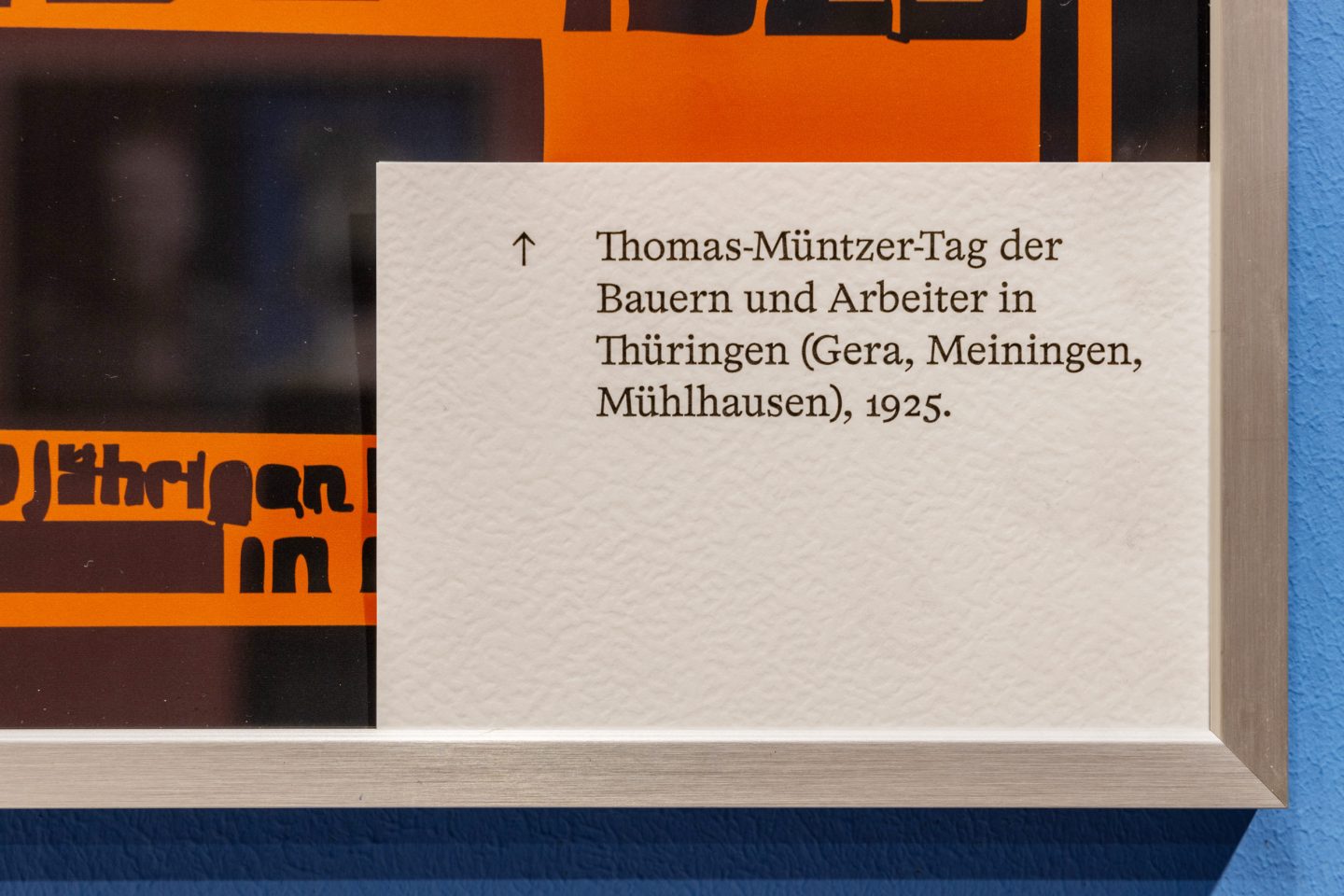
Five hundred years ago, the Peasants’ War shook the established order and left behind a tangle of voices, images, and conflicting interpretations. Even today, contemporary accounts and later readings overlap. The 2025 anniversary highlights this diversity: a variety of perspectives exist. Some of them were told in the exhibition »500 Jahre Bauernkrieg« at Deutsches Bauernkriegsmuseum. Böblingen, as a historic battle site, positions itself as a place of encounter. Faces of the uprising appear—different protagonists emerge in various scenes throughout the exhibition. The exhibition translates the plurality of events into a clear visual system. Colors inspired by the Bundschuh banner structure the chapters, each representing an aspect of the uprising. The exhibition design gives space to different actors; the backgrounds are painted in a color scheme similar to flags, to commemorate this.
An event and its faces
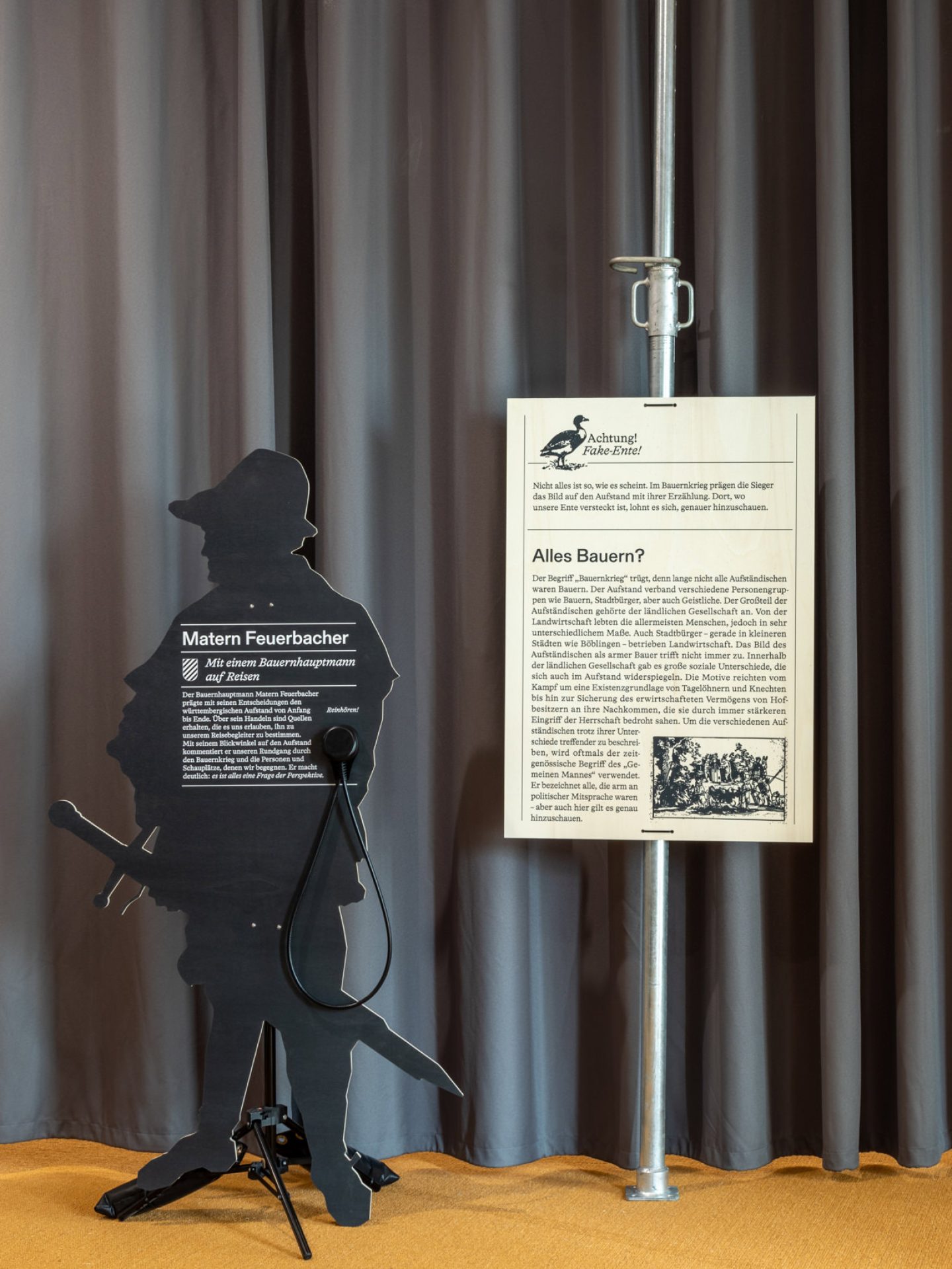
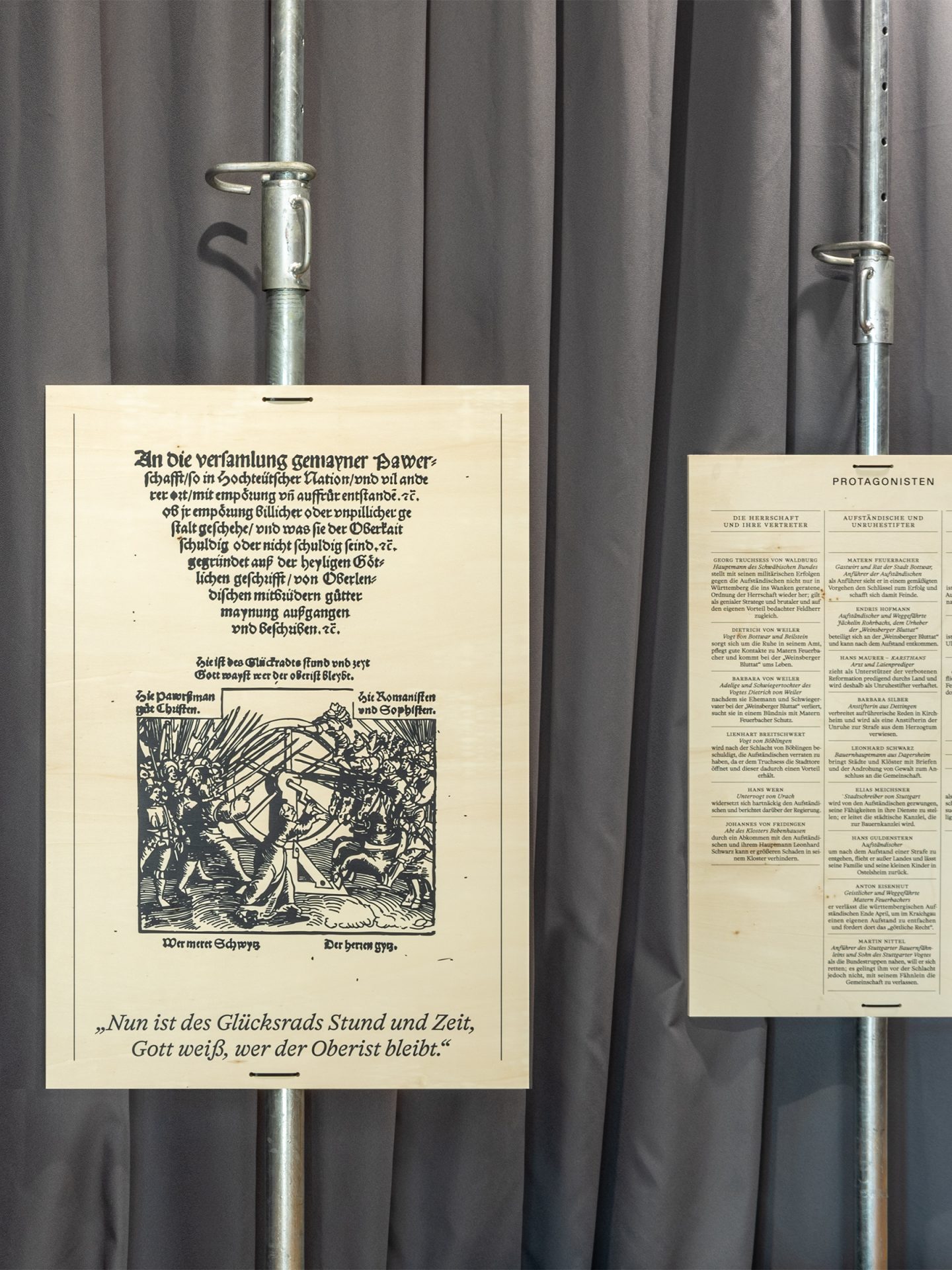
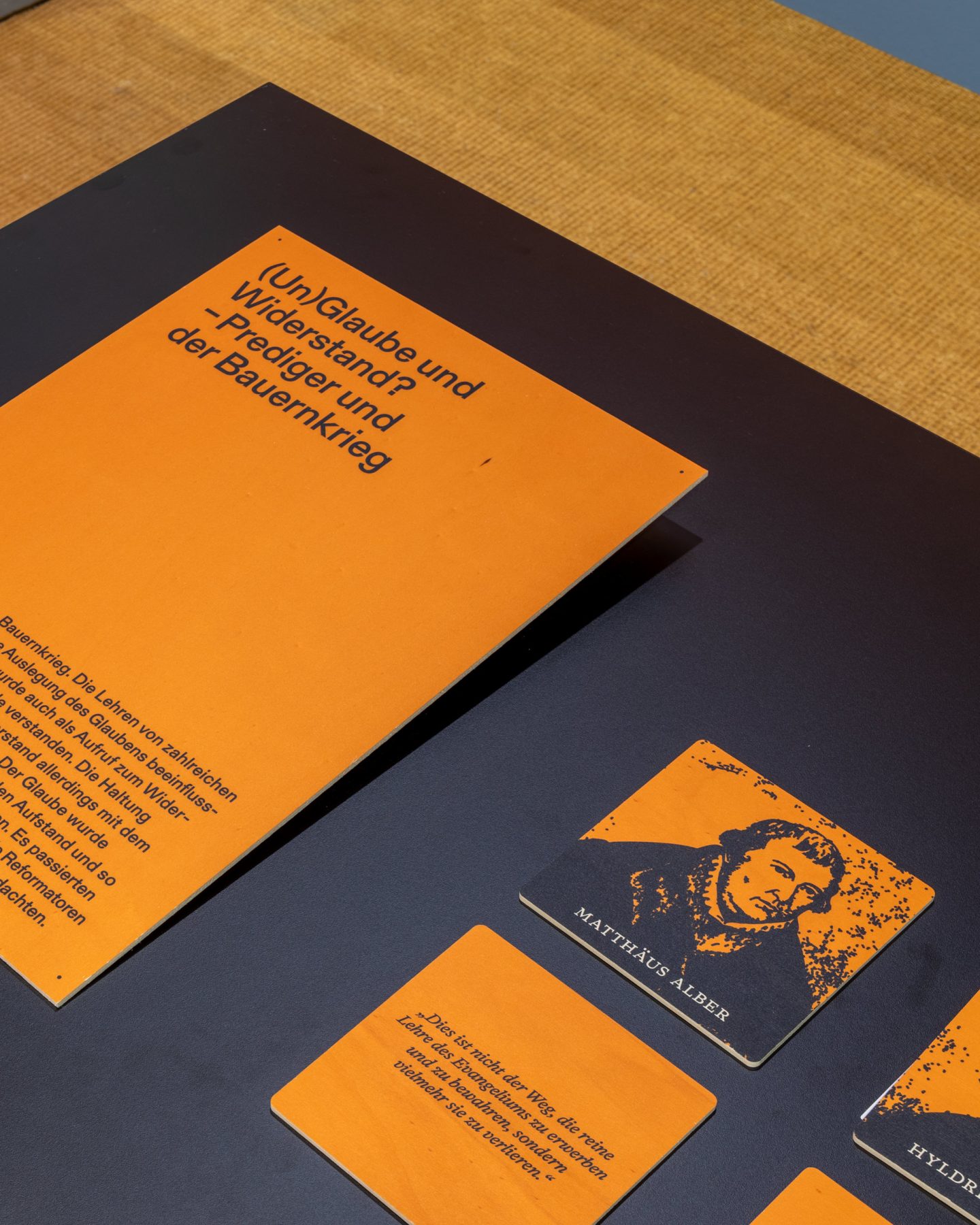
In the first exhibition area, guiding lines trace the course of the conflict—from its beginnings to confrontation and tragedy. In doing so, they connect spaces and build tension. Illustrations provide insight into imagined scenes of the period, while interactive elements encourage visitors to explore decision-making and consider how context shapes perception. At the same time, typographic headings function like chapters in a stage play. They mark key turning points within the exhibition design. Audio stations featuring the protagonist Matern Feuerbacher, one of the leaders of the peasants’ uprising, furthermore embed personal voices into the space.
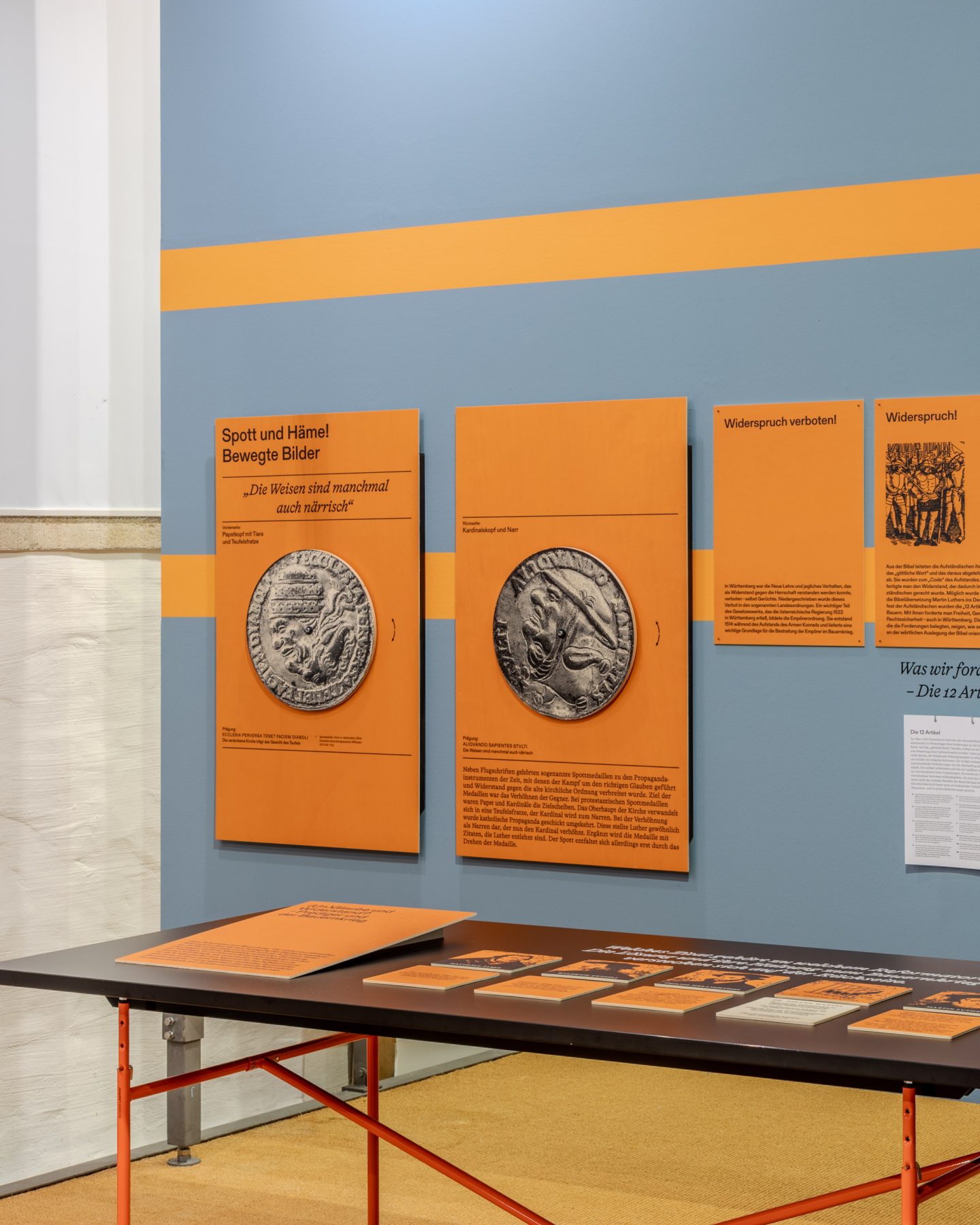
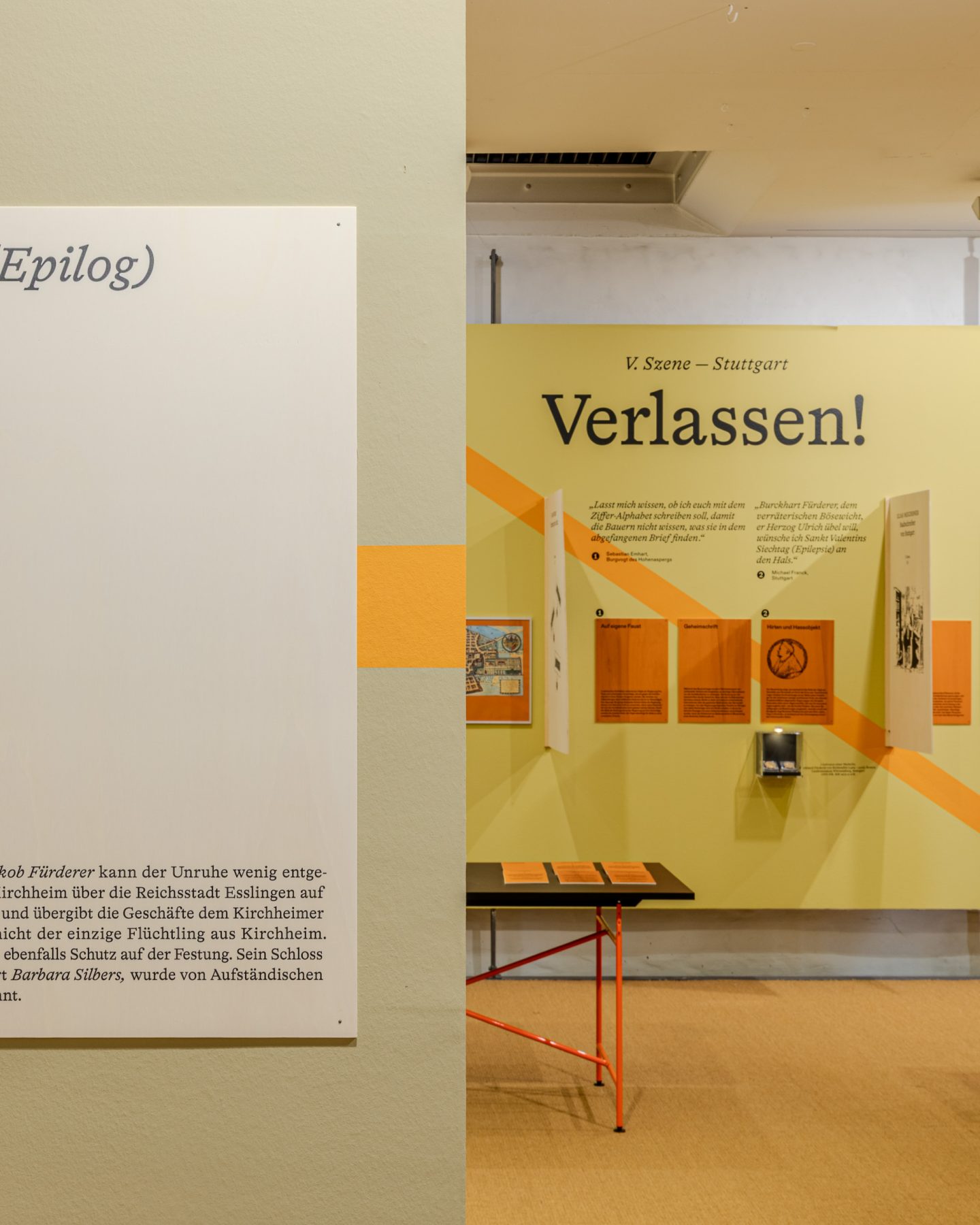
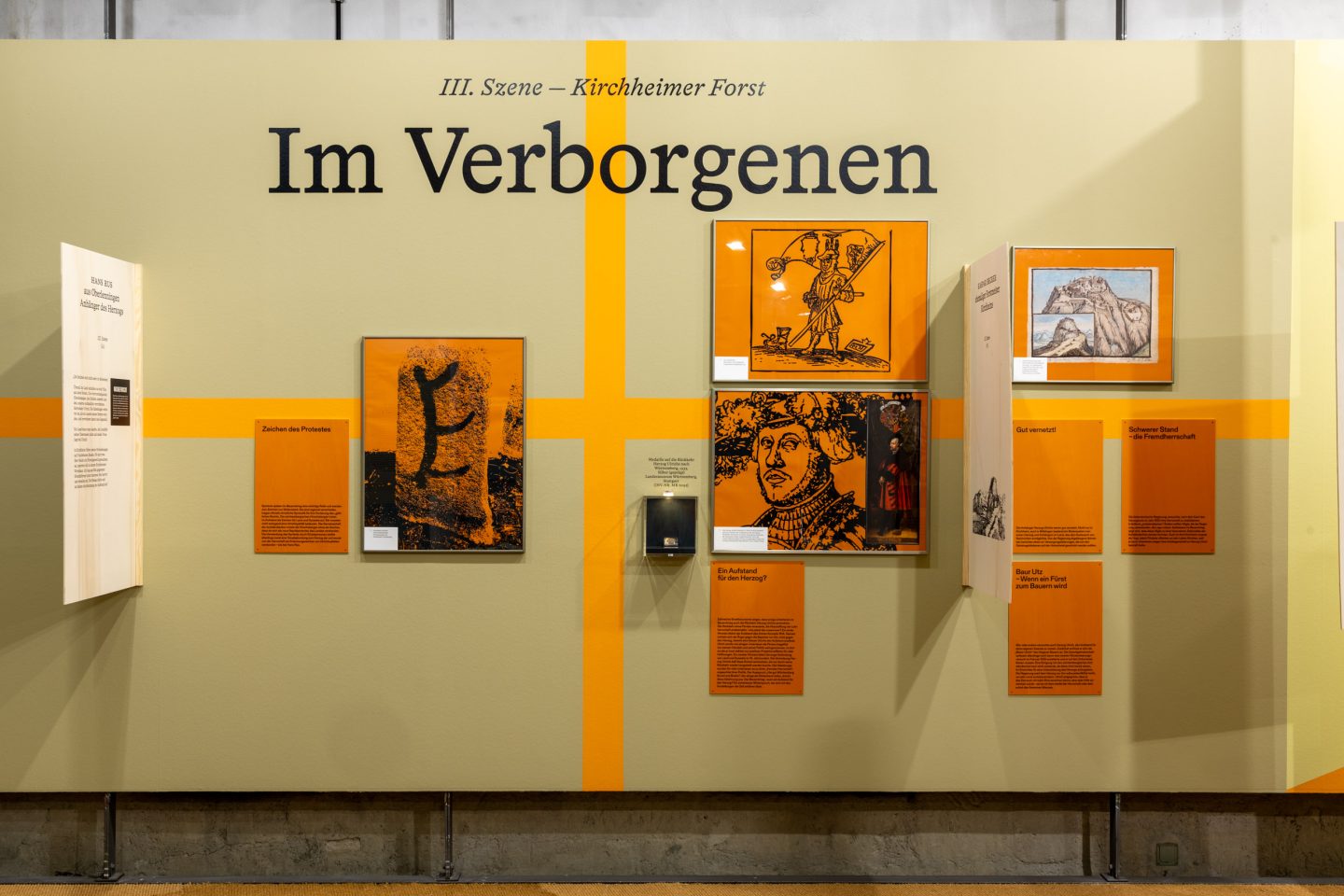
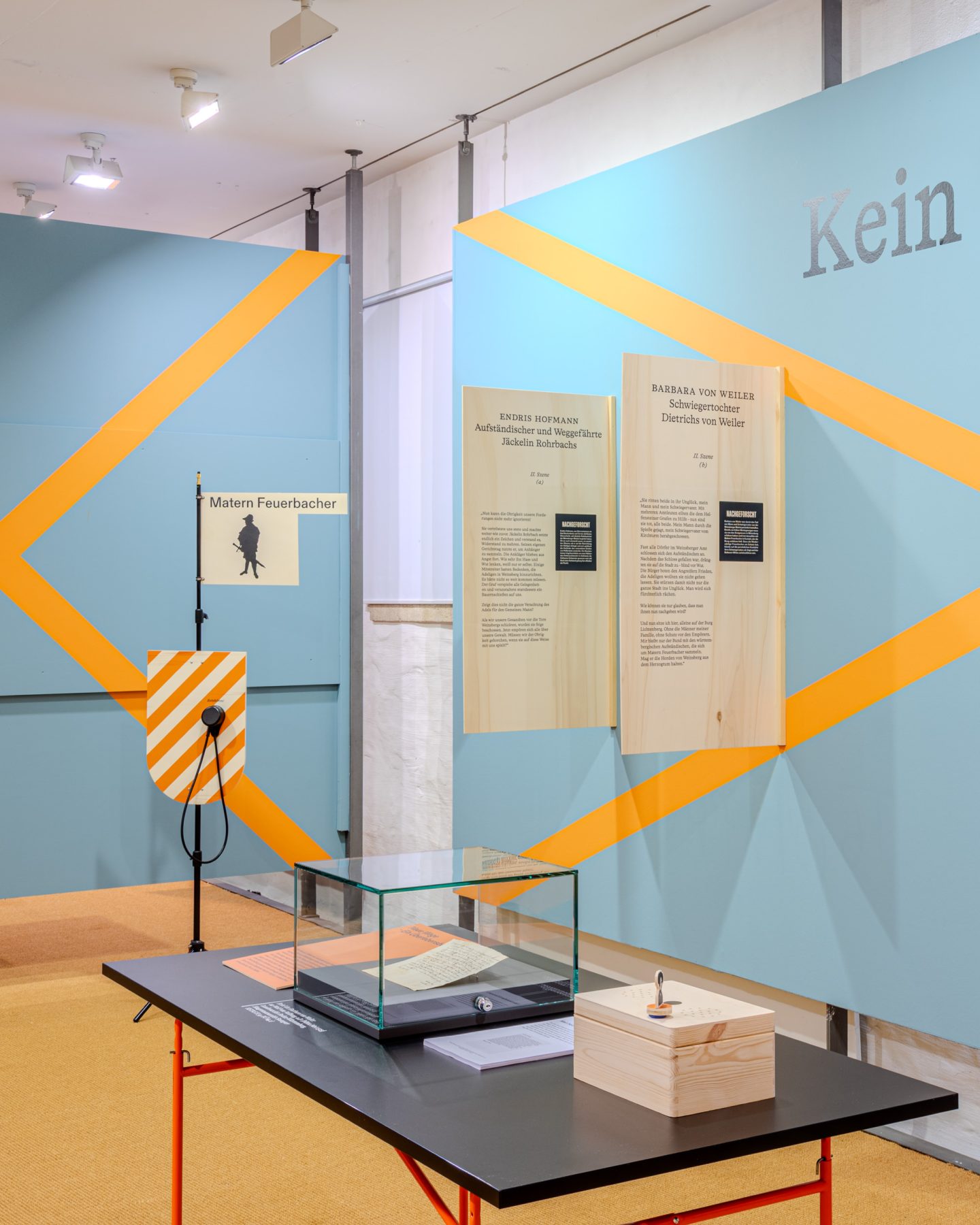
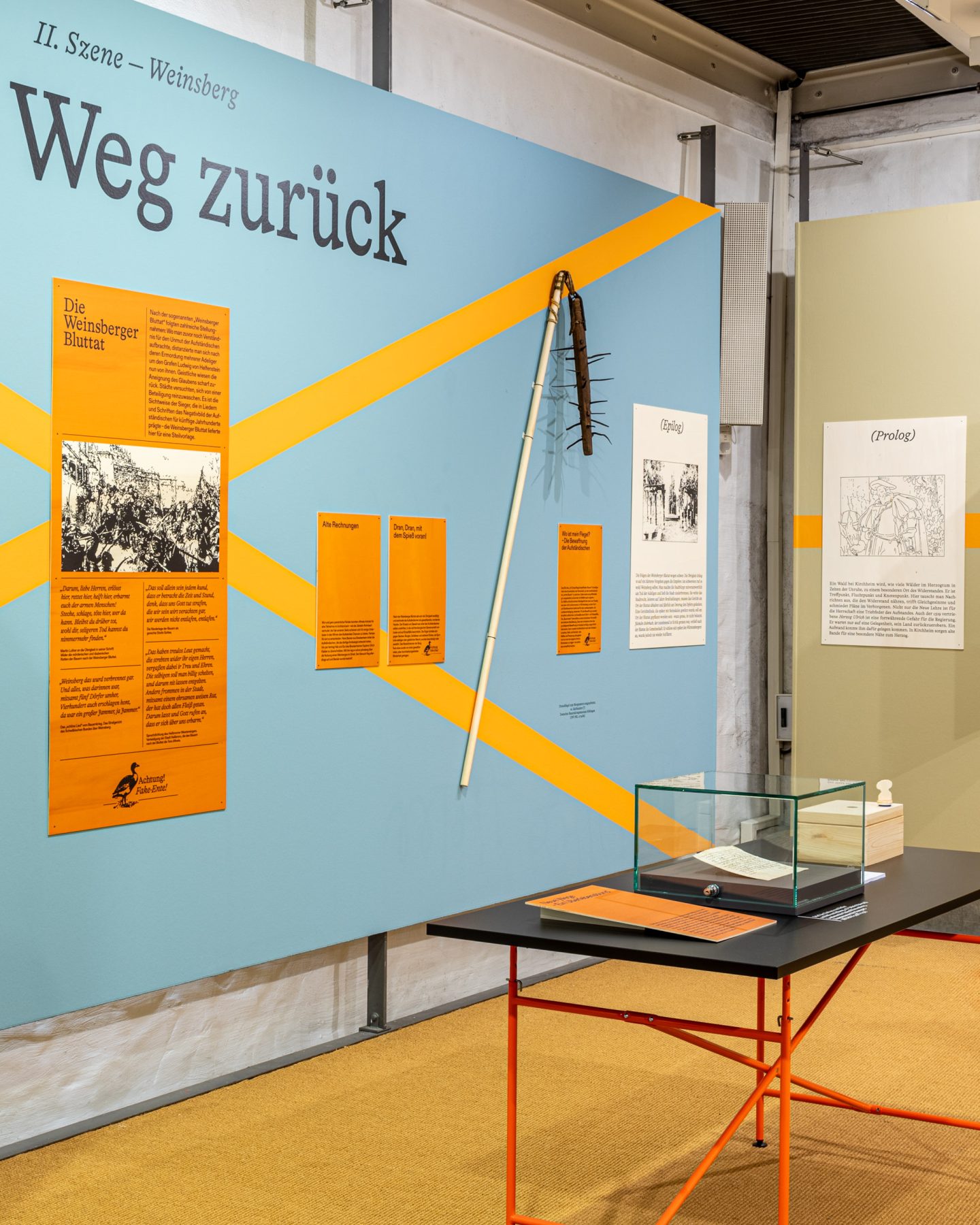
Distorted Images? Dramatic Structures from 500 Years
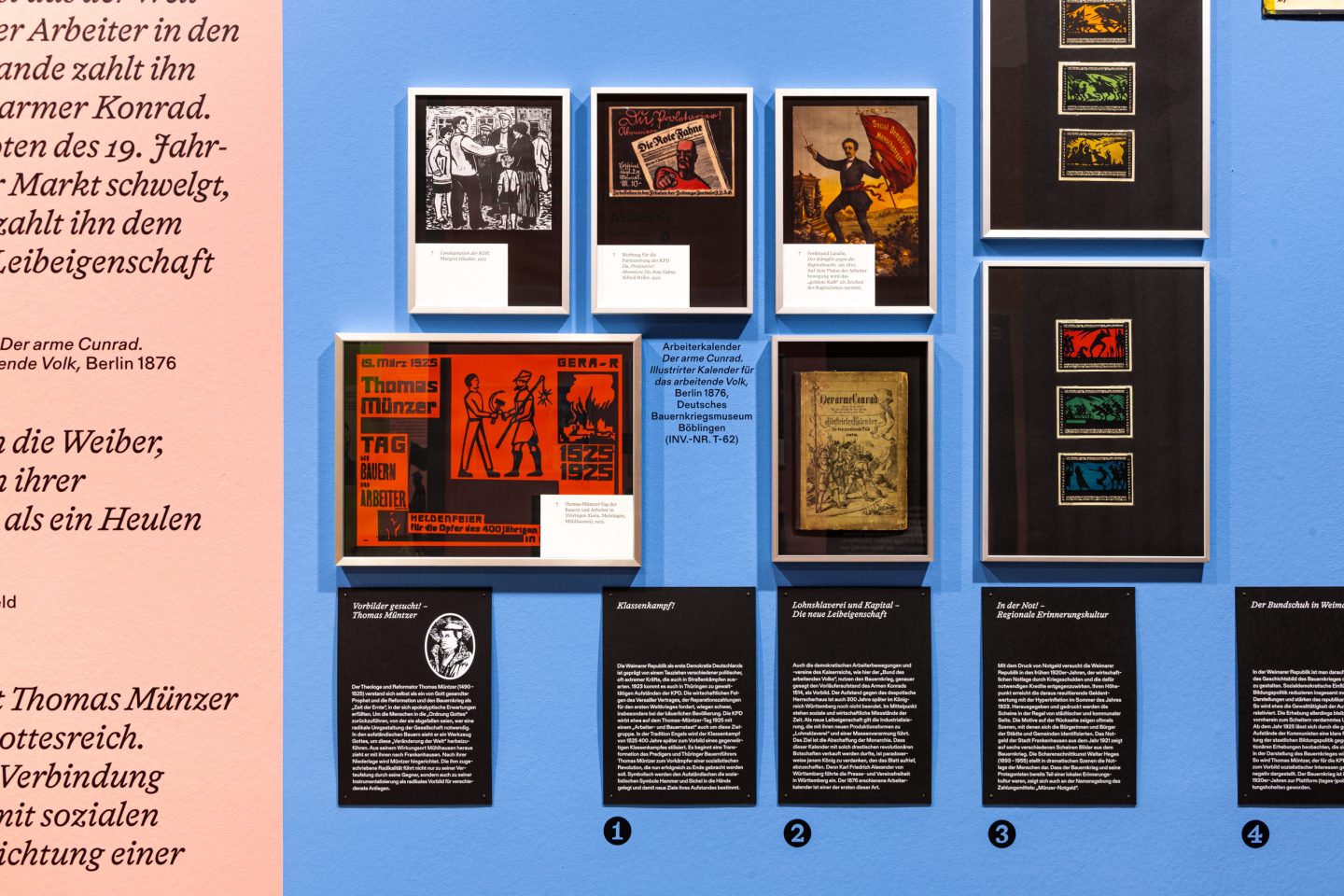
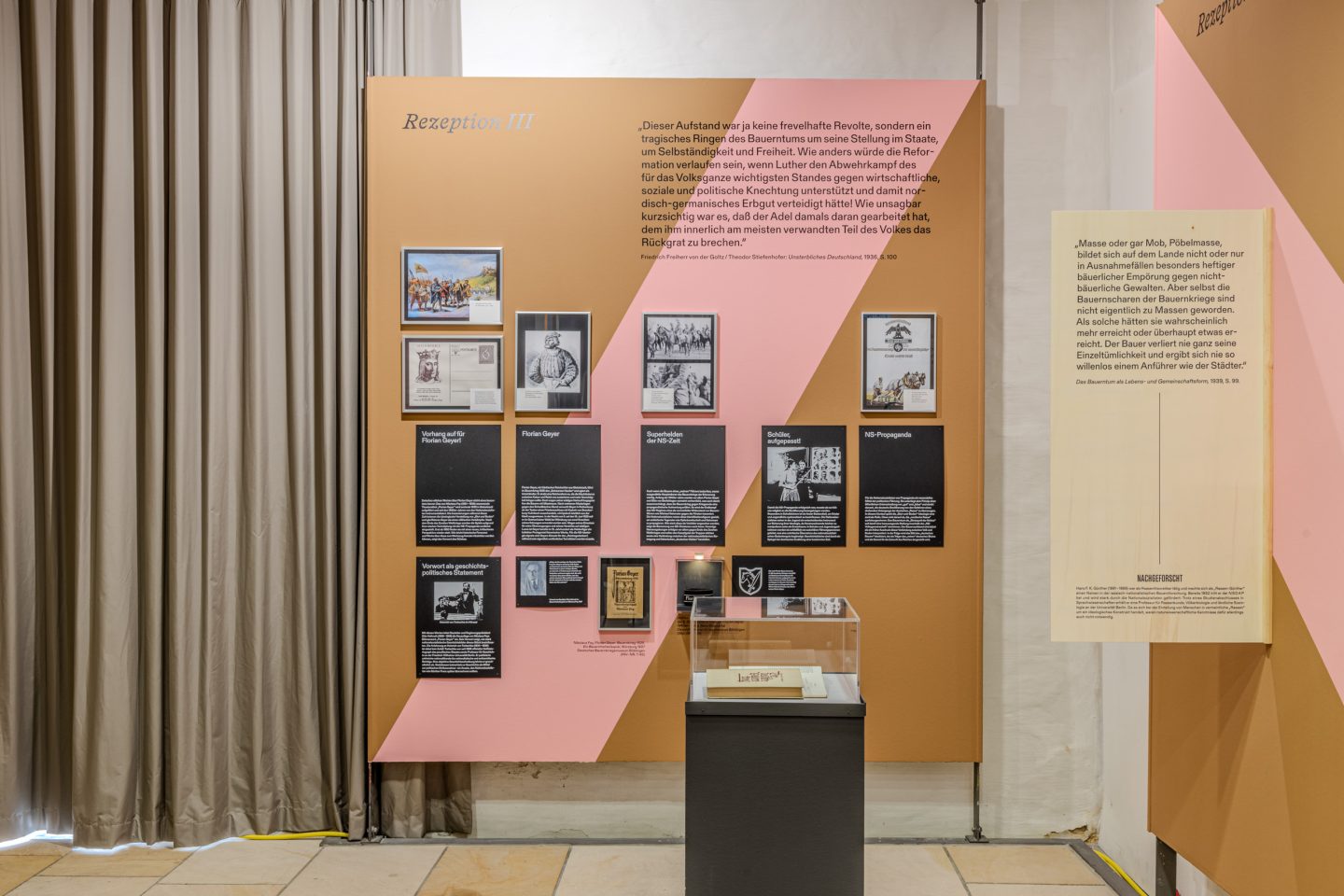
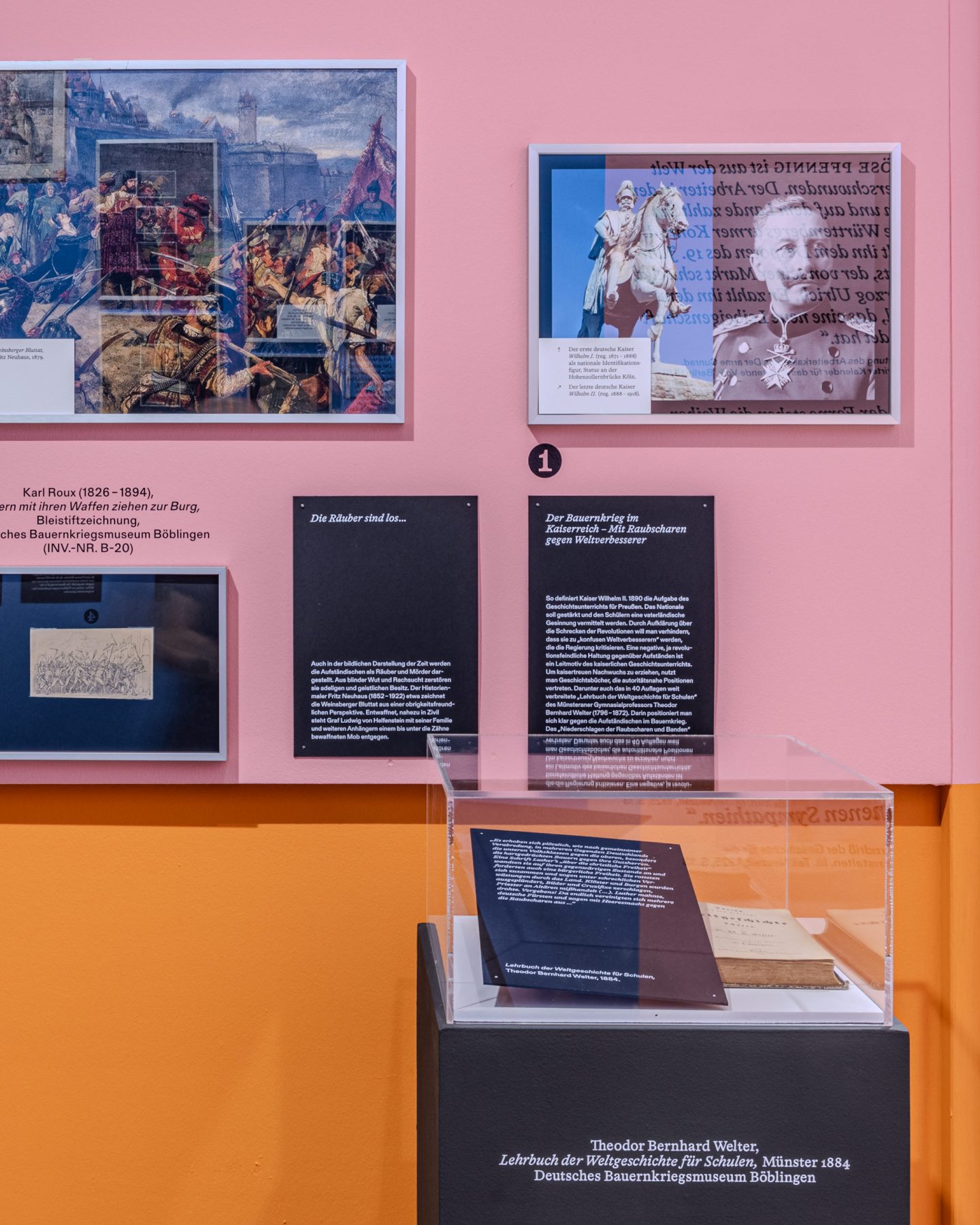
The second exhibition area examines how the Peasants’ War has been politically reinterpreted over centuries. From different points of view, the uprising is variously celebrated, moralized, or instrumentalized as propaganda. In this way, it becomes a projection surface through which shifting ideas and identities can be observed over time. At the same time, the exhibition shows how these interpretations change when viewed from today’s perspective. Accordingly, the exhibition design creates a space in which different perspectives coexist in dialogue and where visitors can form their own view of the uprising.
Client: |
Deutsches Bauernkriegsmuseum [German Peasants’ War Museum] |
Partners: |
Lea Wegner, Johannes Hucht, Steffen Knöll, Sven Tillack |
Photos: |
Studio Tillack Knöll, Sven Tillack |
Studio Tillack Knöll is a multicreative design practice that concerns itself with the visual and spatial aspects of communication. We design exhibitions, wayfinding systems, books, posters and cultural identities for a variety of clients involved in architecture, art, science and commerce to cultural institutions and NGOs.